Company fleets, without the paperwork chase.
Group a company’s vehicles, send each estimate to the right approver, and bill them on one statement.
One approval. Several bookings.
A service for every van is priced, approved by the company’s own approver once, and booked as separate jobs on the days each van is free. Only the approved amount counts against their budget.

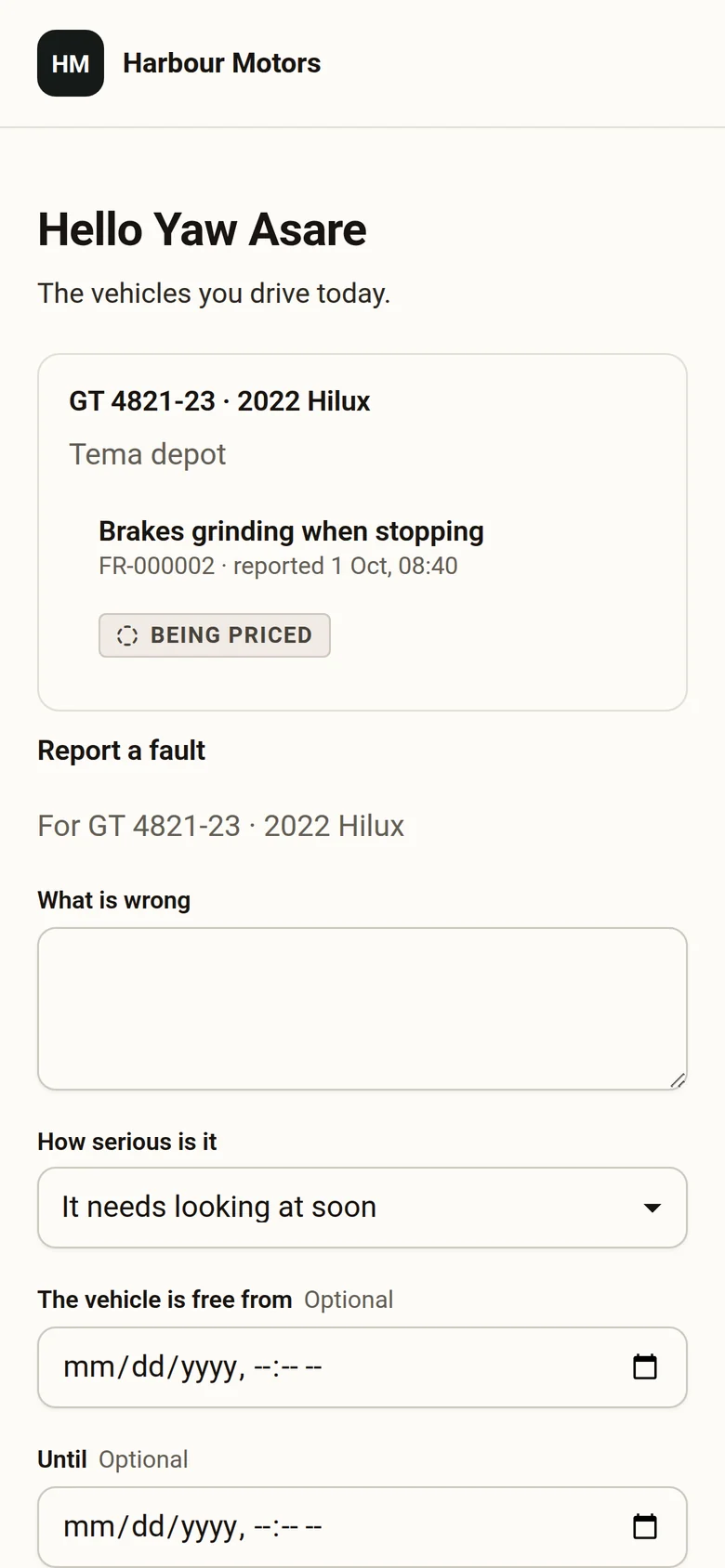
Drivers report faults from their phone.
Each driver gets a link. It shows only the vehicles they drive today, takes the fault, how serious it is, a photo and when the vehicle is free. It never shows what anything costs.
- Vehicles where they belong
- By cost centre, site and custodian, with one driver per vehicle on any day.
- The right approver, every time
- The company says who approves which work and from what amount. The estimate goes to that person, or their delegate.
- Purchase orders when they ask
- Taken before approval or before the invoice, whichever the company chooses. The screen asks for it at the right moment.
- One statement a month
- A statement groups the invoices you already issued. No second invoice, no revenue counted twice.
- Cost per vehicle
- What each vehicle cost in a period, with the jobs behind it and its time off the road.
- Contracts and downtime
- Response targets are measured. Downtime comes from recorded off-road and back-on-road times, and any gap is shown as a gap.
Company work is decided by the company.
When an estimate is above what was already approved, the job says so and sends it to their approver, so nobody approves it at the counter by mistake.