Roadside help, from the call to the workshop.
Take the breakdown call, send an approved tow partner, and bring the car in without typing it twice.
Nobody is told help is coming until a driver has accepted.
A call is received, the charge is agreed, then the job is offered to an approved partner with a free truck in that area. If they do not accept in time, it comes back to your team to phone someone.

The caller and the partner, each on their own phone.
The caller
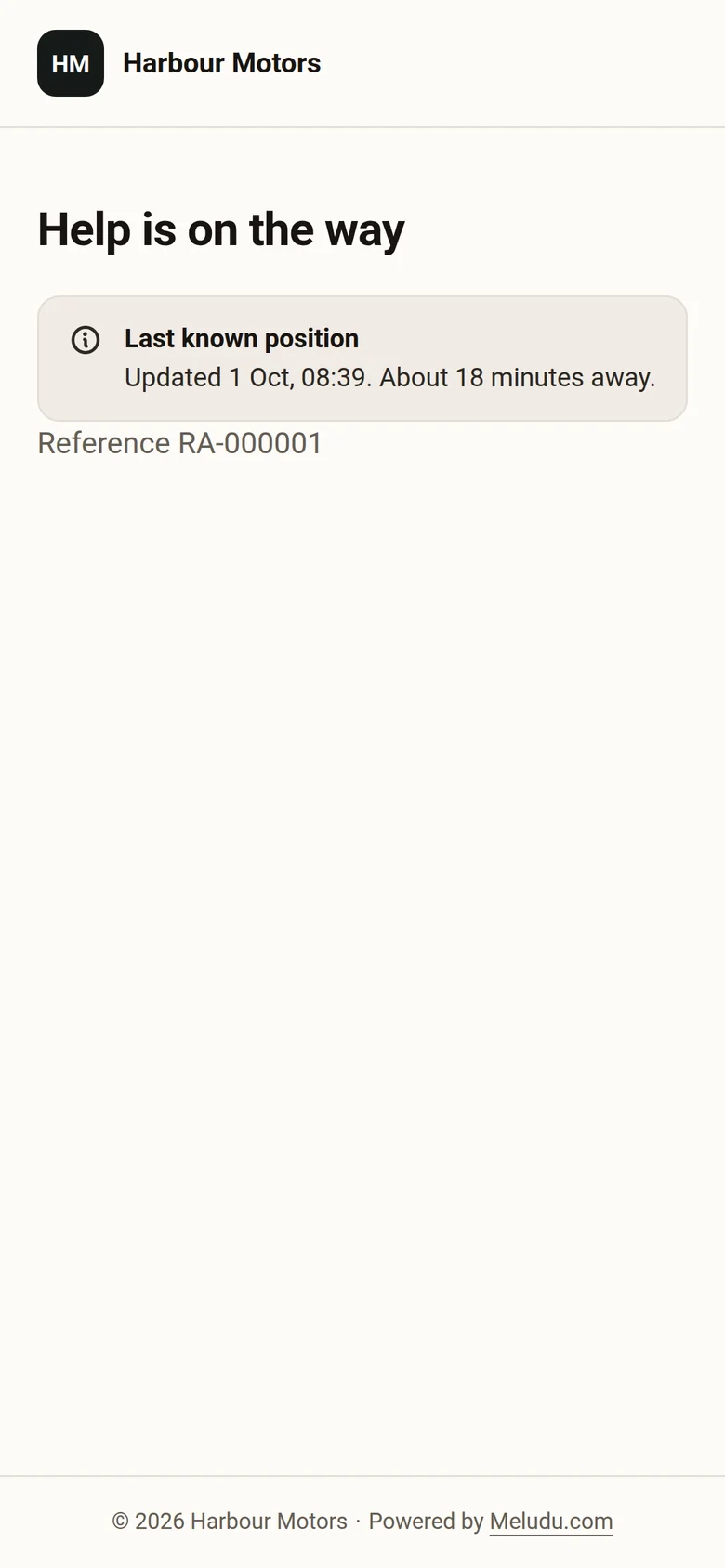
Sees the driver’s last known position and how far away they are, only while the trip is on. An old position is marked old.
The partner
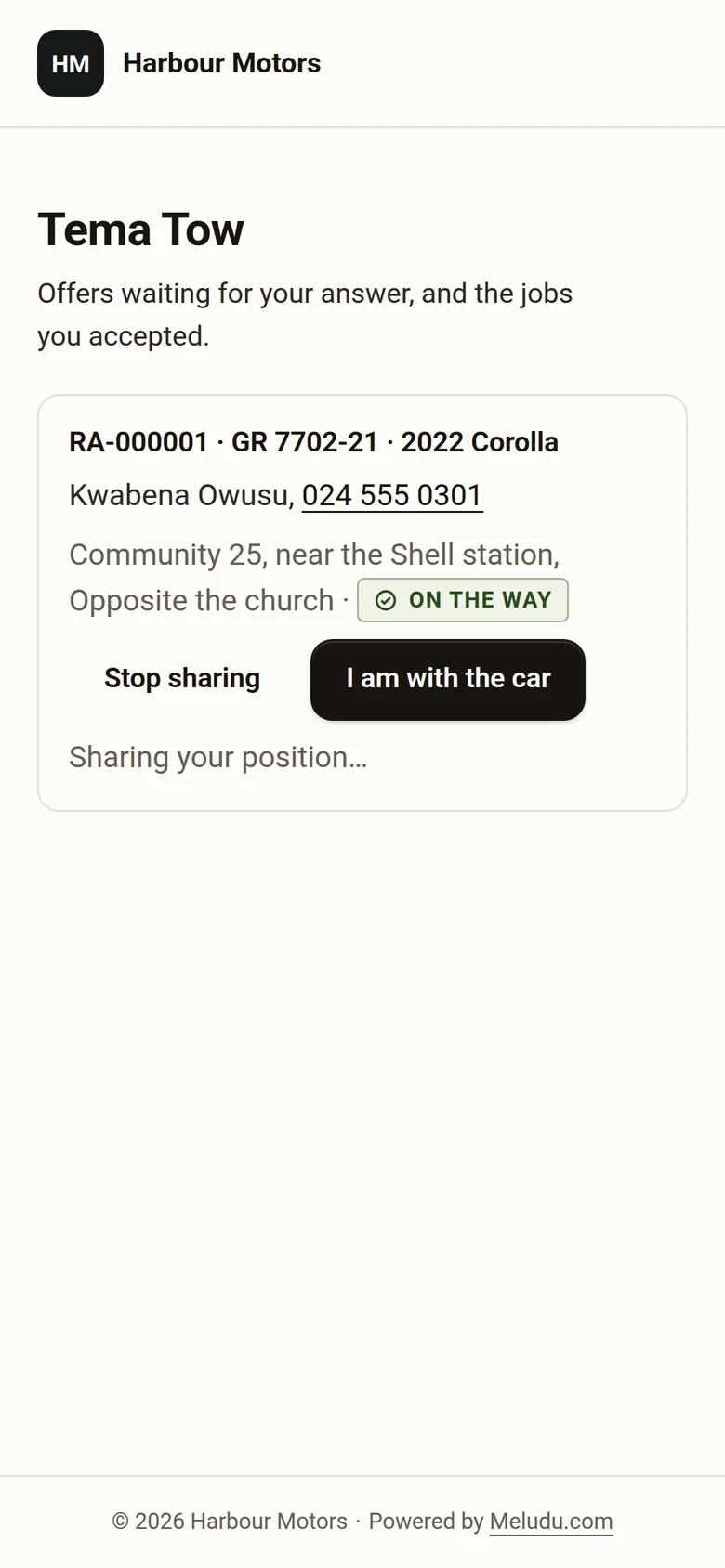
Accepts or declines, sets off, shares their position if they choose, and records the collection and drop-off with photos. They see only the jobs they accepted, and their own payouts.
- Safety first
- Every call asks whether everyone is safe. A caller in danger goes to the top of the list.
- The charge agreed before anyone is sent
- The price is quoted and the person who agreed to it is written down first.
- Handover at both ends
- Keys, mileage, photos and who handed the car over, at collection and at drop-off. The customer confirms the job is done.
- Towed into your workshop
- Drop-off opens the job for the same customer and car, or joins the one already open, with no second charge.
- Courtesy cars and drivers
- A courtesy car or a dealer driver is never booked twice. Damage found on return goes to a manager, not straight onto a bill.
What you owe a partner stays apart from what the customer pays.
Partner payouts are their own records, marked paid with a reference. They never touch a customer invoice.